
The Megaro design and character
The first thing most guests notice is the building itself. The Megaro’s façade is covered in a large-scale mural — vivid, unmistakable, and directly opposite the St. Pancras clock tower. It’s not subtle, and it’s not meant to be. It tells you something about what’s inside before you’ve crossed the threshold.
The Megaro is King’s Cross’s design-led hotel. It’s the kind of place that has made deliberate choices about what it looks like, what it feels like, and what kind of guest it’s for — and then stuck to those choices throughout the building.
Where the design comes from
The Megaro’s interiors are built around a steampunk sensibility rooted in the history of the neighbourhood itself. King’s Cross was once one of the most industrially active parts of London — Victorian engineering, coal, railway innovation, the raw energy of a working city. The design takes that heritage and pushes it somewhere theatrical and strange: copper piping, heavy textures, dramatic lighting, apothecary references, rooms that feel less like standard hotel spaces and more like sets built for a particular kind of experience.
That sensibility runs consistently from the lobby through to the basement bar. Hokus Pokus sits underground, its interiors a blend of futuristic steampunk and Victorian chemist’s shop. Spagnoletti, the all-day Italian restaurant on the ground floor, carries the same design intelligence in a warmer, more sociable register. Both were designed by Henry Chebaane, the creative mind behind the hotel’s overall vision, whose work draws on graphic storytelling, theatrical staging and a deep sense of place.
The rooms
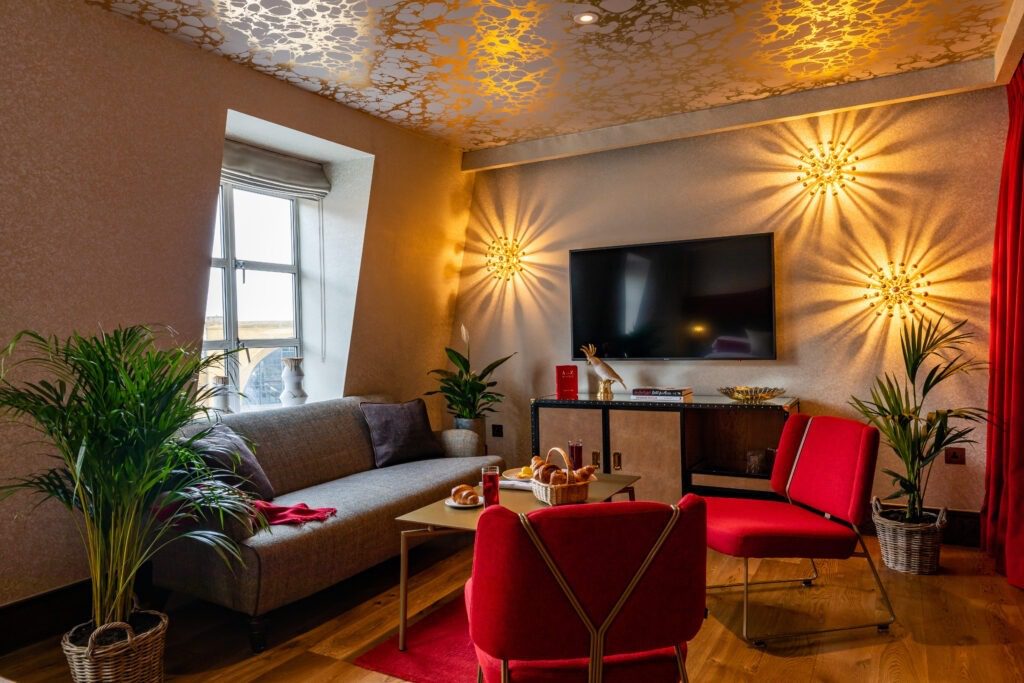
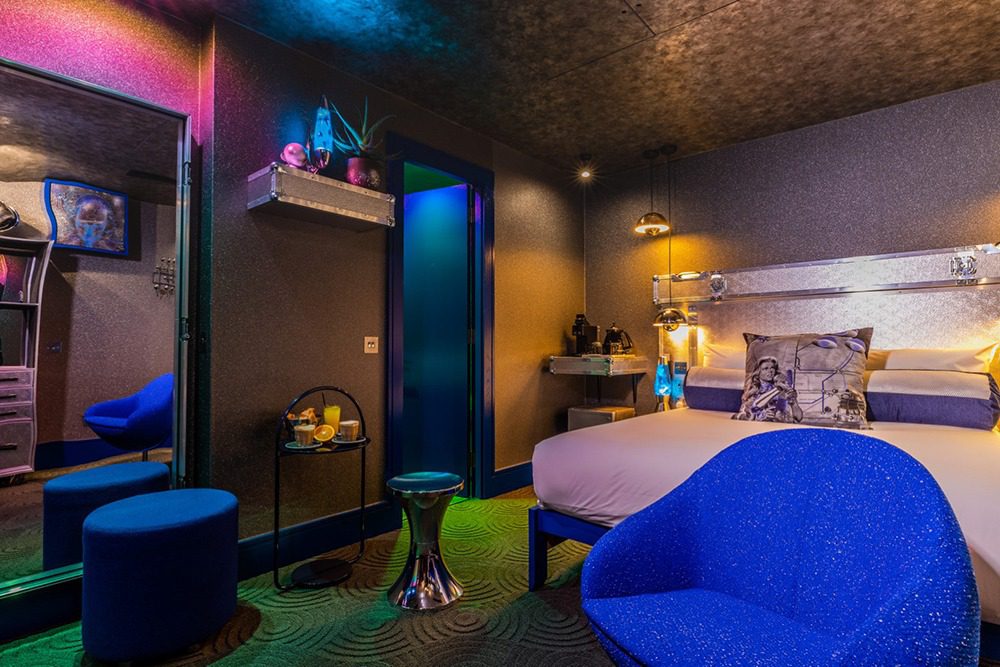
The Megaro currently offers six room and suite themes, each designed as its own contained world. The Design Suites Collection sits at the top of the range: the Pop Diva Suite takes its cues from backstage culture and pop excess, with rich reds, gold detailing and a studio-style layout. The Diesel Corner Suites occupy the corners of the building with 34 sqm of space, industrial textures and darker tones. The Megaro Studio Suites take a more pared-back approach, open-plan and quieter in character, designed to feel residential rather than theatrical.
The brief for every room is the same: personality and comfort together, not one at the expense of the other. Rooms are individually designed rather than produced to a single repeating template, which means guests choosing The Megaro for a second or third stay can book a different experience each time.
What this means in practice for guests
Design-led hotels occasionally prioritise atmosphere over function. The Megaro is not that. Work desks are standard. The location, directly opposite St. Pancras International, is practical as well as atmospheric. The concierge team can arrange in-room wellbeing treatments. Dogs are welcome. Spagnoletti runs from breakfast through to dinner. These are the details that make a hotel usable rather than merely impressive.
The character of the place is strong enough that it’s worth being direct about who it suits best. Guests who find anonymous hotel design alienating and want a stay that reflects London’s creative and cultural history will find The Megaro hard to improve on. Guests who want something quieter, or prefer a townhouse aesthetic over a theatrical one, may find one of the other Collection hotels a better fit — The Gyle and The California, both in the same King’s Cross neighbourhood, each have a distinct character of their own.
Related Articles
18 Jun 2026
King’s Cross for a Summer Weekend, Done the Megaro Way
31 May 2026
The Megaro: A Stay Guide for King’s Cross
Subscribe
Newsletter
Be the first to hear about great offers, new openings and events.
By subscribing, you agree to our Terms & Conditions